TRANSFORMING ENTITIES - Monotype & Mixed Media Installations

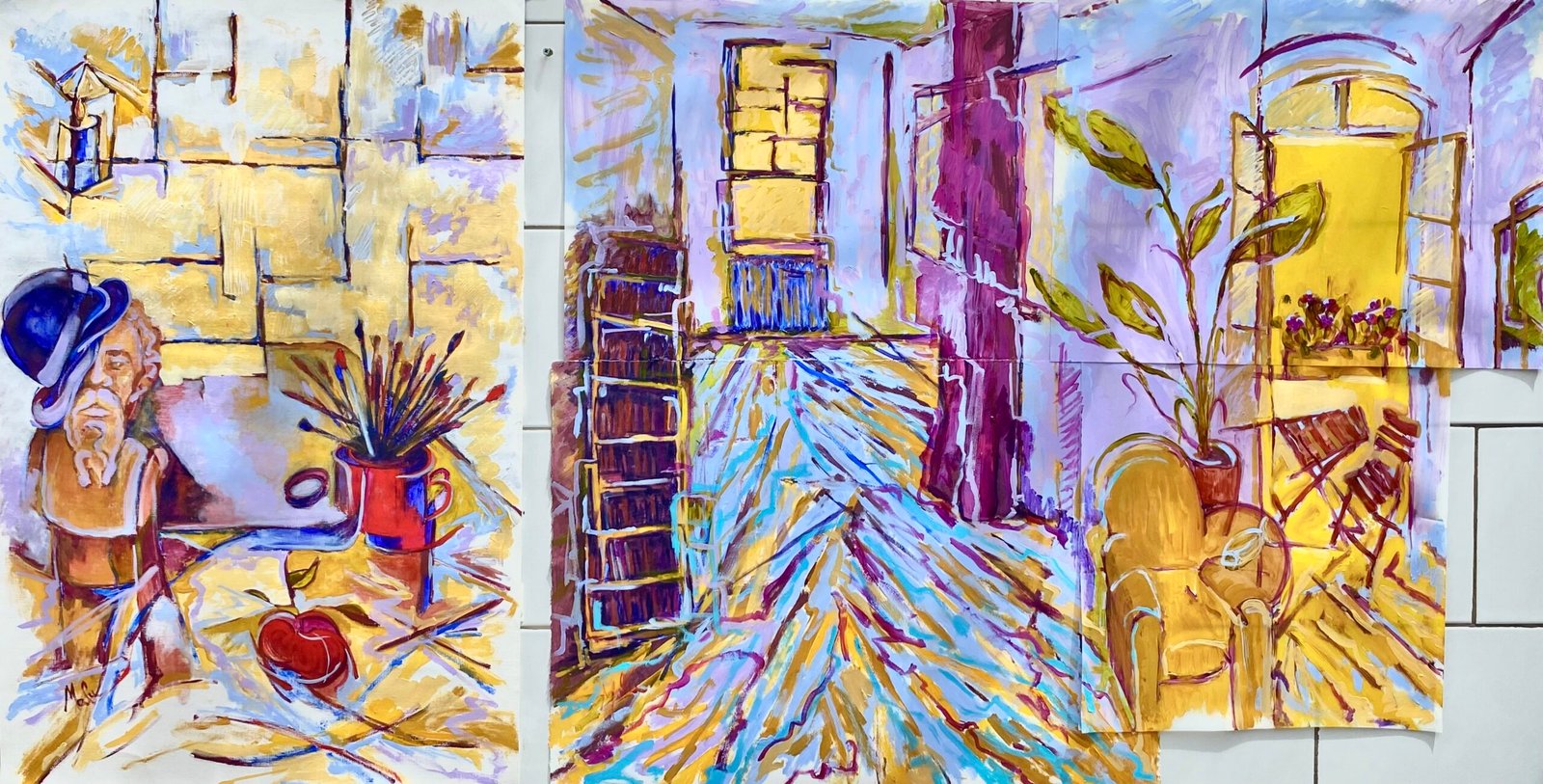
I am beginning with modular or “space to space” paintings to explore or push the boundaries of waiting. I’ve a first example in The Studio, Unfinished, where the modules evolve spontaneously as needed to respond to the marks and narratives started in first modules, materials may be changed or added, the theme connects them, but they may not represent smooth image transitions, but to represent the different mind states and memories, to reflect upon the passage of time, of space as time… the goal is to bring my paintings and monotype installations closer to a cohesive connected research …

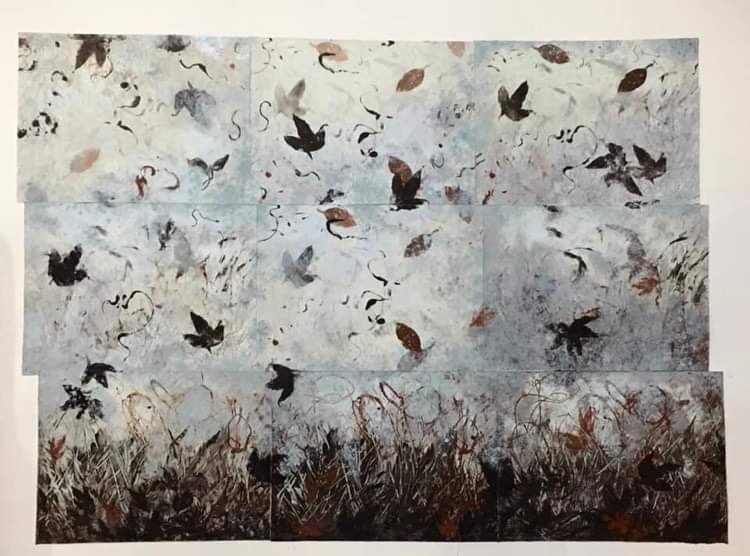
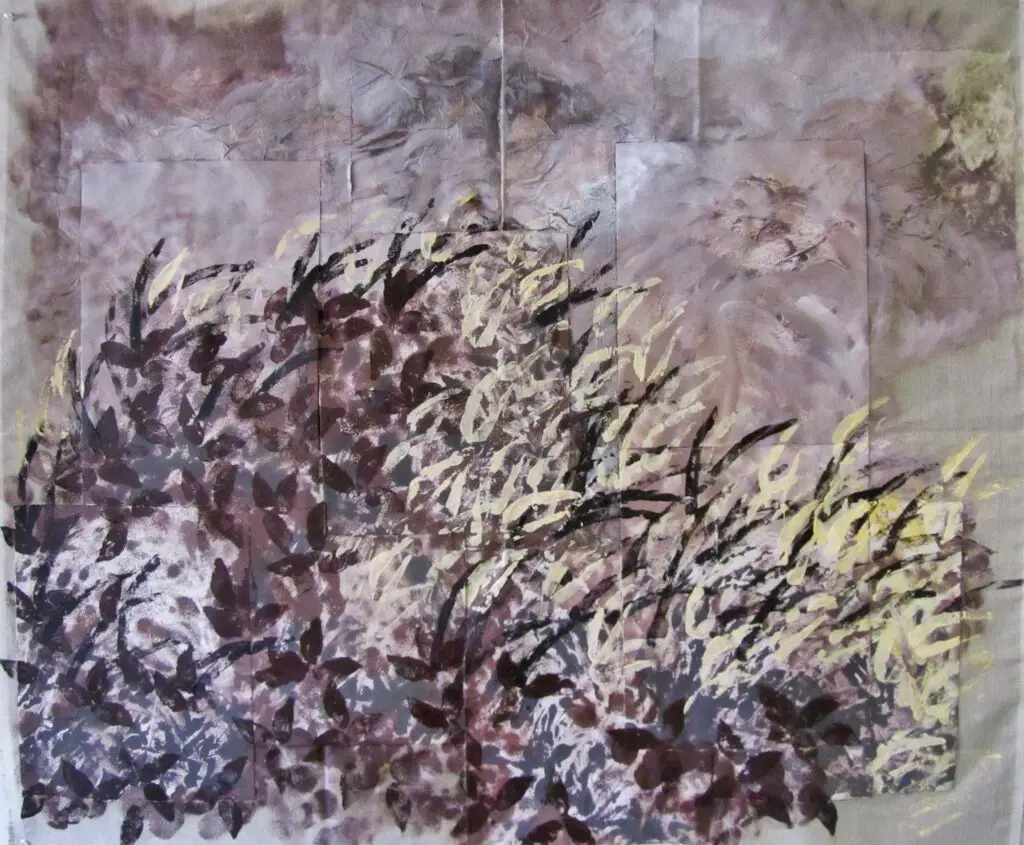
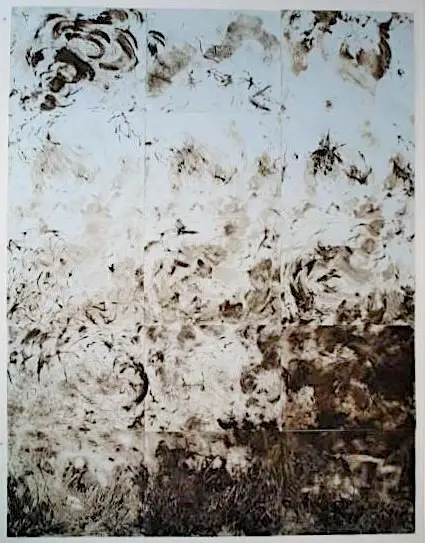
and about the monotype installations created spontaneously, using electric dremel and ink swiping, marks, to cause accidents and imperfections, creating larger entities or murals, from smaller modules/ papers, arranged as the process develops, into a wholistic image; highly abstracted but still referencing nature in figuration. These pieces are not framed, they’re made using electric dremel on plexiglass which creates textures (intaglio), inked in various ways as monotypes to infuse atmosphere, varying marks and textures, and then, stamping with leaves or handmade recycled styrofoam stamps in the shape of leaves or natural elements. This matching of edges off-register often, and stamping creates a cohesive whole which the audience interprets and completes the meaning. 
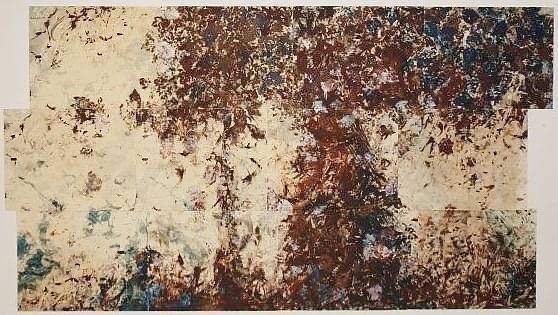
The Studio, Unfinished (ready for exhibition)

Acrylic on paper & mylar sheets, or mixed media installation, 76×40″ as shown, but may alter on installation or if framed separately in 2 modules, 2026.

While working aesthetically on her Visual Magical Realism, Malu explores the discussion of how often artists and curators debate upon the issue of when is a painting or work of art is finished, complete. A painting cannot easily register and “archive” its different stages, but that is exactly what Malu proposes to do. She began to consider her works unfinished, in process, in transformation; her work is never finished, the “coup de grace” isn’t’ given, the work is interrupted mid execution, the modules of paper, mylar, canvas, mixed media, may continue indefinitely their narrative about the image and about the process, so it is not only that the viewer interpretes and completes meaning later, but it is the process itself that which records the different stages and thought process/ responses to marks made before … the work is explored in both, during its creation, and its experiencing through the 4th dimension of time…

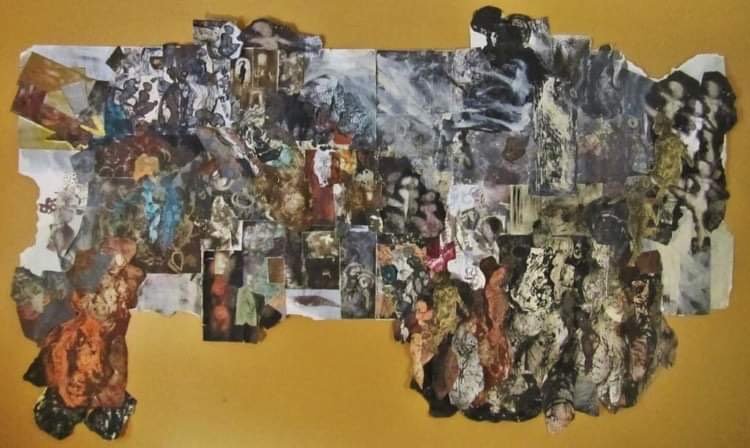
The first four works in this portfolio are in order from left to right, top to bottom: Windy (2017), Tall Grass (unfinished, & destroyed, 2014), Landcape (1998), and Ojarasca (2001). Landscape was part of an international artists exhibition curated by Malu at the New York Law School Gallery, in collaboration with the Organisation of Independent Artists. Ojarasca, received a Merit Award by juror Prof. Donald Kuspit, at the International Juried Art Show at the Visual Arts Center of NJ, 2002.

WALL OF LASCAUX, 1998

Wall of Lascaux, is a mixmedia collage of artist’s proofs with some acrylic off-white washes. It was the main piece part of the Honours Solo Show at the Dean’s Office, Department of Fine Arts at Pratt Institute, 1998. (Sadly, this project is no more, however Malu is re-creating the idea in an entirely new piece)

Chaos

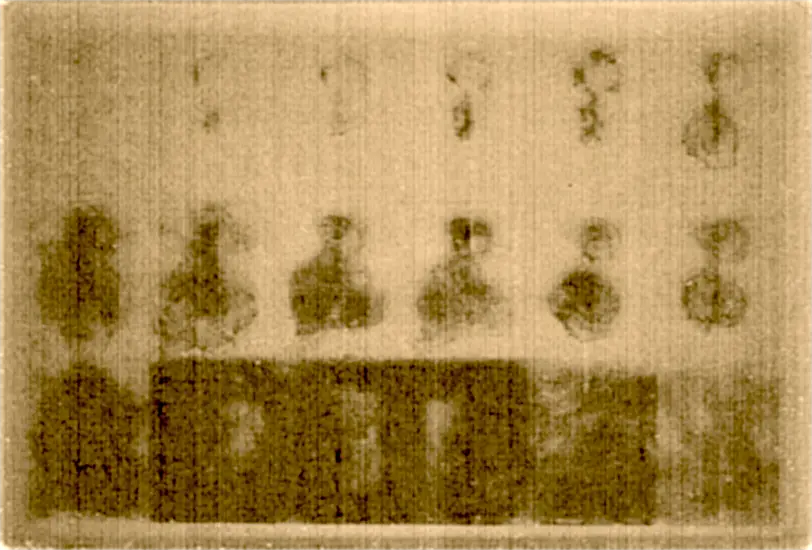
Chaos is a meta-printmaking project, also executed with electric dremel onto plexiglass; it is a commentary on the endless variants a same transforming plate/image may produce, including artist’s proof and editions. (The left side image is a scanned slide as a placeholder till a new picture is updated onto this space.- the piece is shown with a dried or paper butterfly to reference the Theory of Chaos, the infinite possibilities of printmaking). This artwork was selected by juror Prof. Donald Kuspit, to take part in a major annual Fine Arts Symposium, organised by sculptor Prof. Gillian Jagger, with participation by curator Laura Hopman (then, MOMA), and NY art critics such as Cynthia Nadelman, at Pratt Institute, BK, NY – 1997.  

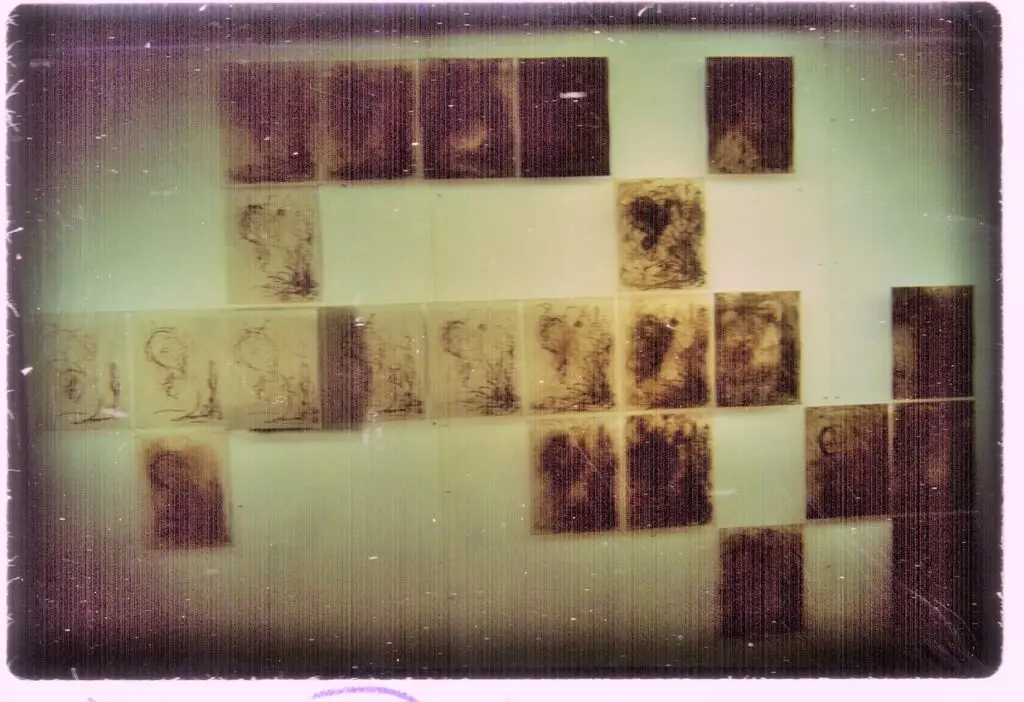
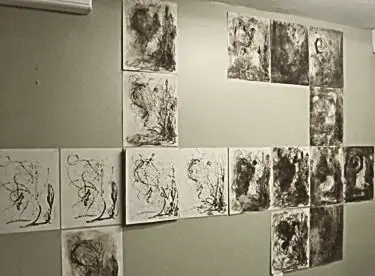
Genesis

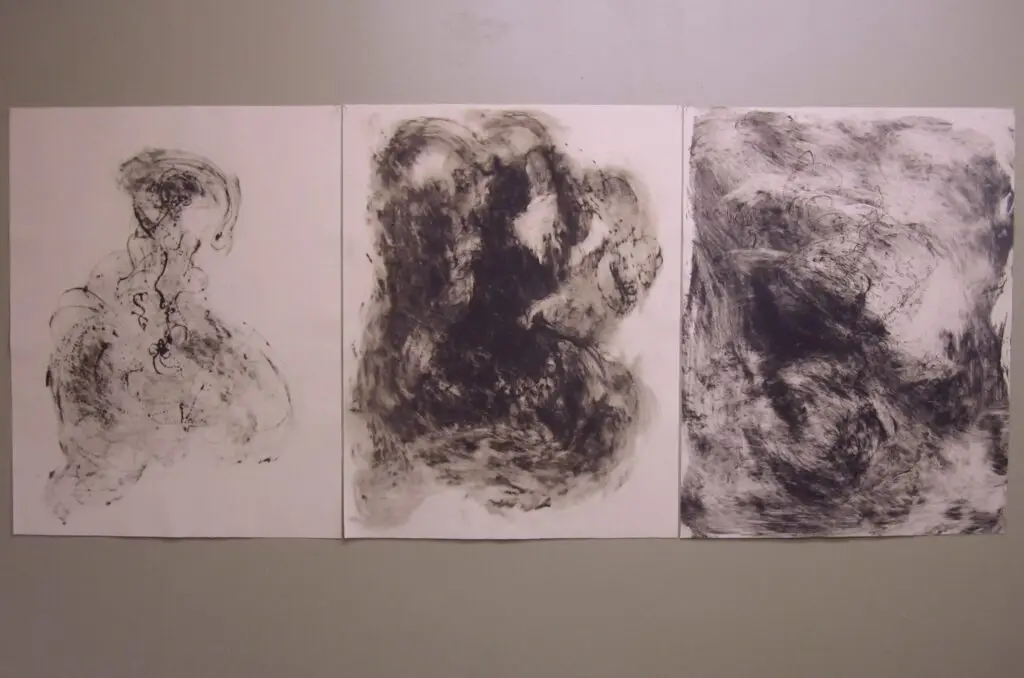
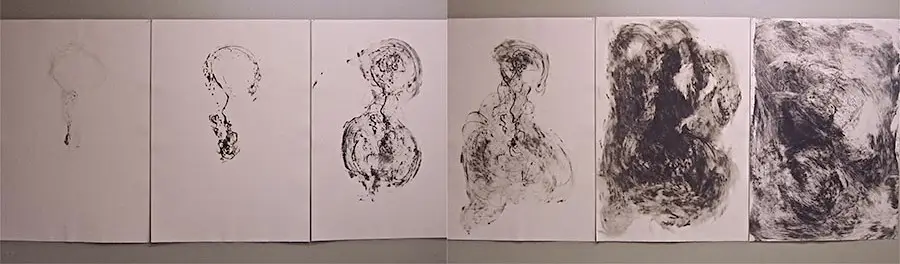
 Genesis is a suite of monoprints or monotypes, also a meta-printmaking project, where a being evolves in each separate state of the transforming  plate (worked with electric dremel on plexiglass, inking and wiping etc), it can be displayed in a long row of prints, an open book of prints, or as a mural installation as seen in the scanned slide on the left. The other images show details of this project (Inspired after viewing Le Taureau by P. Picasso at the Department of. of Drawing & Paper Arts, MOMA, NY -1997.